The sound of health
Por Suanshu Khurana. Artículo extraido del Diario Indian Express, edición Web del día 19 de Julio de 2009.
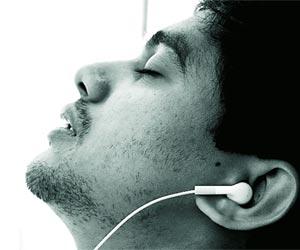
Music is now being used by doctors as a therapeutic tool
If you are suffering from high blood pressure, invest in an iPod, advises Delhi-based cardiologist and consulting physician Dr Neelam Verma. “Slow-paced music can calm the nerves and control blood pressure by inducing endorphins, the ‘happy’ hormones. However, any high musical crescendo increases the blood pressure by causing the blood vessels under the skin to narrow,” she says.
Listening to music has long been known to beat stress and now, even science backs “music therapy”, the use of music by a trained professional to achieve therapeutic goals. Health experts vouch that music in conjunction with conventional medicine can work wonders.
But does music really heal? Or does it just soothe? Dr Sanjay Chugh, a senior consultant psychiatrist with the International Institute of Mental Health, Delhi, has been using music therapy on his patients for many years and says it works best on children with speech problems. “The brain processes music in both its right (creative) and left (logical) hemispheres. Thus, music can not only stimulate cognitive functioning but can also help correct speech/language problems and improve memory and concentration among teenagers. It also helps children cope with stress,” he says. He adds the calming and relaxing effects of music motivate people to choose it as a therapy.
Dr Anil Sangli, consultant neurosurgeon and a music therapist with Apollo BGS Hospitals in Mysore has been studying the effect of music on comatose patients for the last 12 years. He says, “Music is made up of drones or vibrations and so is our body. It reaches the brain through the sensory systems and results in stimulation of crucial brain nerves thus evoking a positive response,” he says.
Ragas like Kalyani, Mohana and Hindola have evoked finger movements, increase in heart rate, happy expressions and increased blood pressure in patients surviving on ventilators or in vegetative state. He says patients with excessive brain damage and the ones in coma, if treated with medicines and music, have recovered faster than those who were given only drugs.
He studied 160 comatose patients of which 80 were exposed to both medicine and music and found that they recovered faster than those exposed only to drugs. Dr Sangli adds that when similar therapy was used on pregnant women, 90 per cent of them had normal labour and had to struggle less during it because of music’s calming effect on the nerves.
Studies carried out by researchers at the Cleveland Clinic Foundation in Ohio, US in 2006, report that up to 21 per cent of chronic pain and depression by up to 25 per cent were reduced by music therapy. A statistical analysis by the Center for Non-linear Science at the University of North Texas has revealed that there was a resemblance between patterns of electrical signals in the brain and that of the musical compositions, which was observed by way of mapping the brain activity and the compositions by regions of similarity, punctuated by jumps where there appeared to be a considerable change.
Hospitals in India have now begun to incorporate the use of music in their wards. Lilavati hospital and Breach Candy hospital in Mumbai play soothing Indian classical and western classical music in the ICU , neurological and maternity wards to speed up the recuperation of patients who have been through critical operations. “For foreign patients, we use Mozart and Beethoven. Otherwise, it’s Indian classical, instrumental music,” says Dr Sanjay Mongia, a neurosurgeon with Lilavati Hospital in Mumbai.
The kind of music is not a decisive factor though. “The important thing is that the patients should listen to the kind of music they like. Most music forms are therapeutic, says Dr Anup Kohli, neurosurgeon with Indraprastha Apollo Hospital in New Delhi though most therapists keep the volume low. Chugh, for instance, uses “soothing music, nothing involving harsh, loud or discordant noises”.